A research notebook at “Quand le ciel recule”
First public sharing of the work in progress, at an art–science day on atmosphere at the Académie du Climat in Paris.
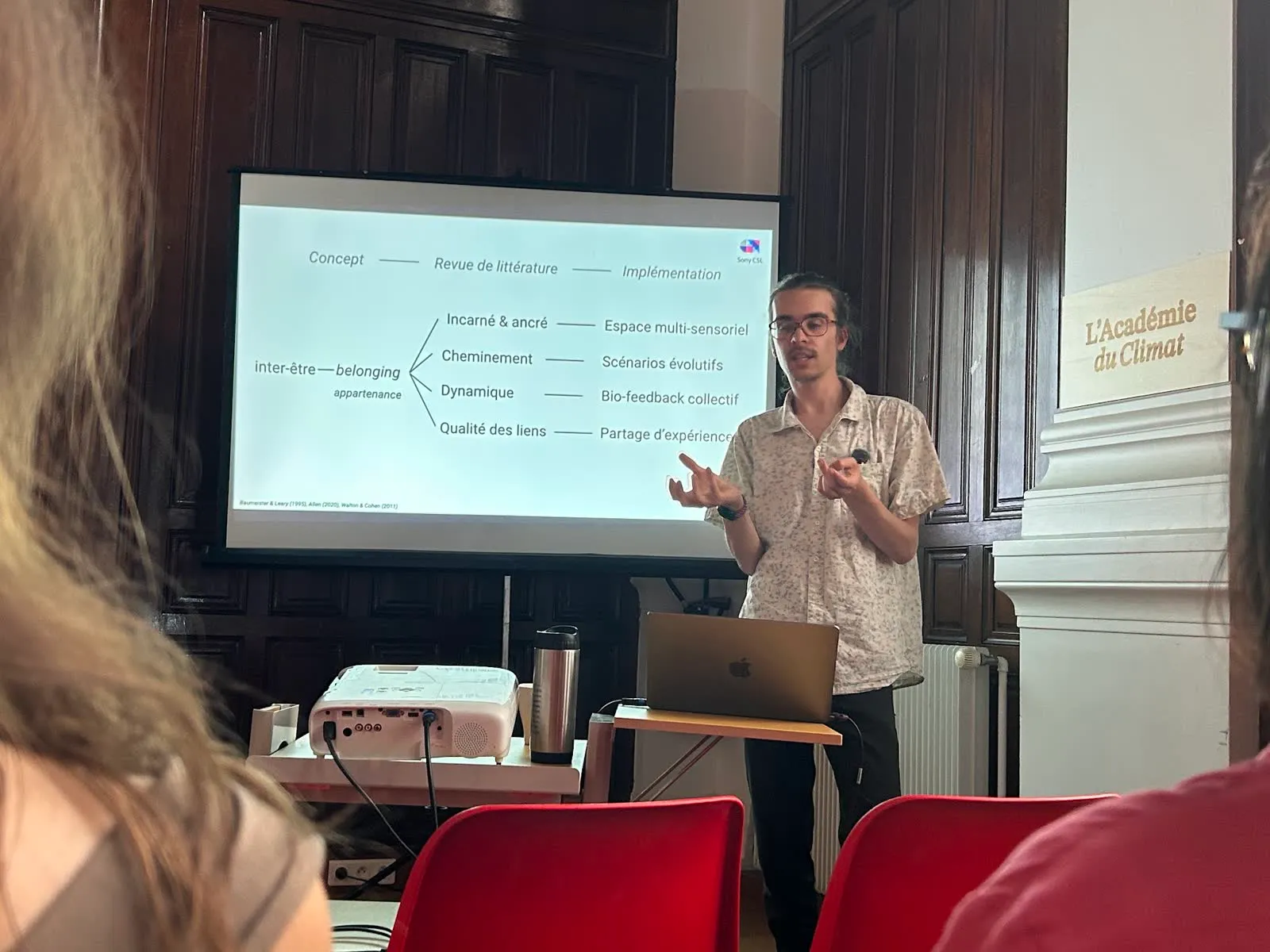
Zéphir presented A Space in Us — carnet de recherche at Quand le ciel recule, a day pairing art and science around the atmosphere, at the Académie du Climat in Paris. (A Space in Us was the installation’s working title at the time. It is now Cloudfulness.)
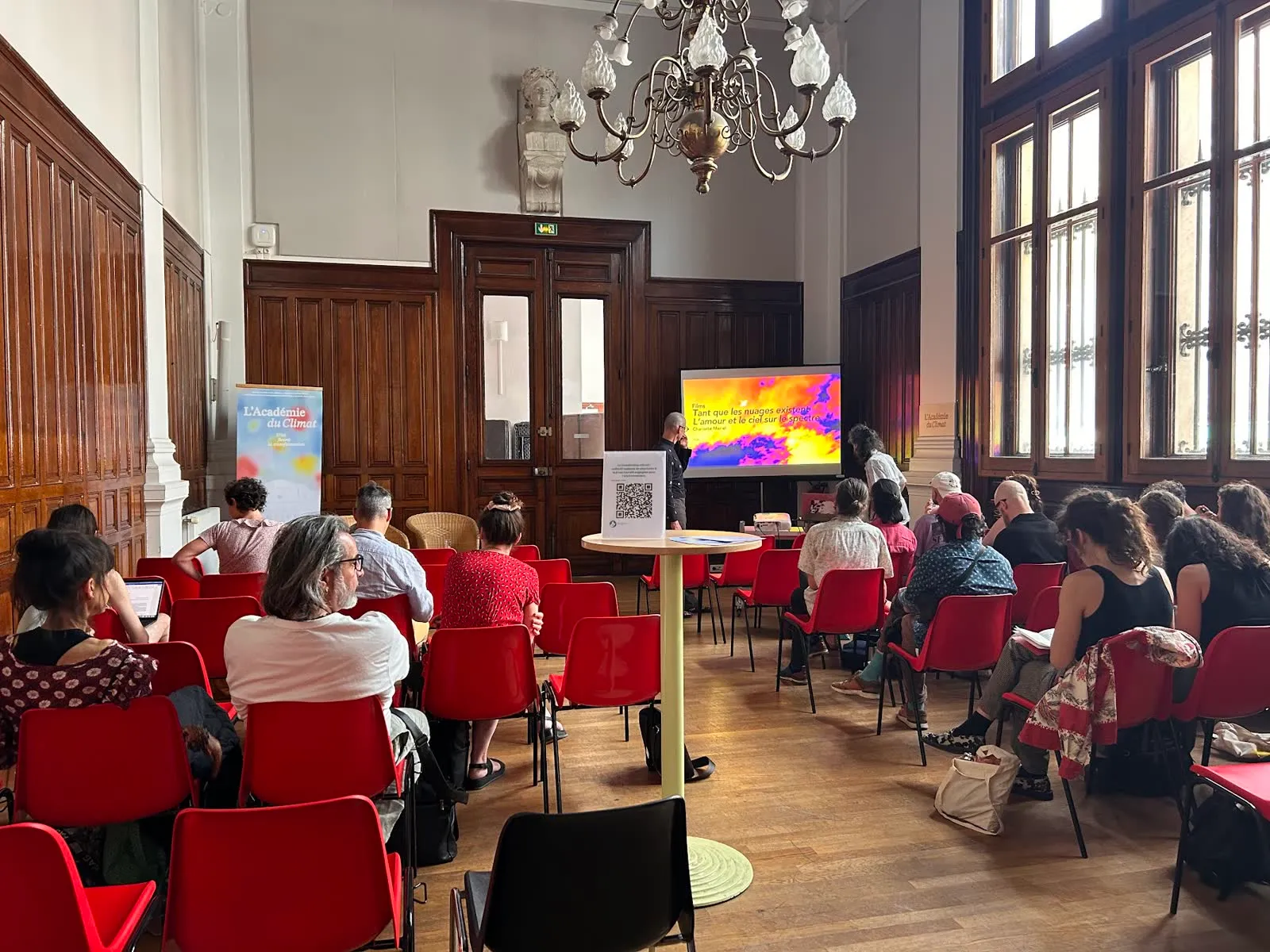
The talk opened the notebook rather than presenting a finished work. Drawing on cognitive science, it explored how to design and measure lived experience, and it followed two projects inviting contemplation and a more sensitive perception of our interdependence: Réespiration and A Space in Us.
Lessons carried over from Réespiration
The preliminary results of the pilot study (20 participants, clearly flagged as not representative of the full study) showed great diversity of responses. They ranged from deep relaxation and an altered perception of self, to boredom, in both conditions, and more markedly in the dynamic one. The team’s conclusions pointed to exactly what Cloudfulness is trying:
- priming, guidance and suggestion — how people are welcomed shapes what they experience;
- more robust biofeedback — imperfect synchronisation was a technical limit;
- several kinds of measures — questionnaires, physiology and people’s own words.
A Space in Us, as presented
The installation was framed around three words: impermanence, letting go, and interbeing, with belonging (appartenance) at its centre. Around it: evolving scenarios, collective biofeedback, shared experience, a multisensory space, and a journey through it. And a future in both public and specialised spaces.
One slide traced the path from concept, through the literature, to implementation. Each quality of belonging found in the research became a design choice:
- being embodied and anchored → a multisensory space;
- belonging as a journey → evolving scenarios;
- belonging as dynamic → collective biofeedback;
- the quality of connections → a shared experience.