Practising together
Compared with meditating alone, studies of group practice report a deeper experience that is easier to sustain. It is also linked with more care for others, empathy and co-regulation of mood.
Concept
We started by asking whether art and technology could help people find a moment of peace. We kept arriving at the same answer: peace is rarely something we find alone.
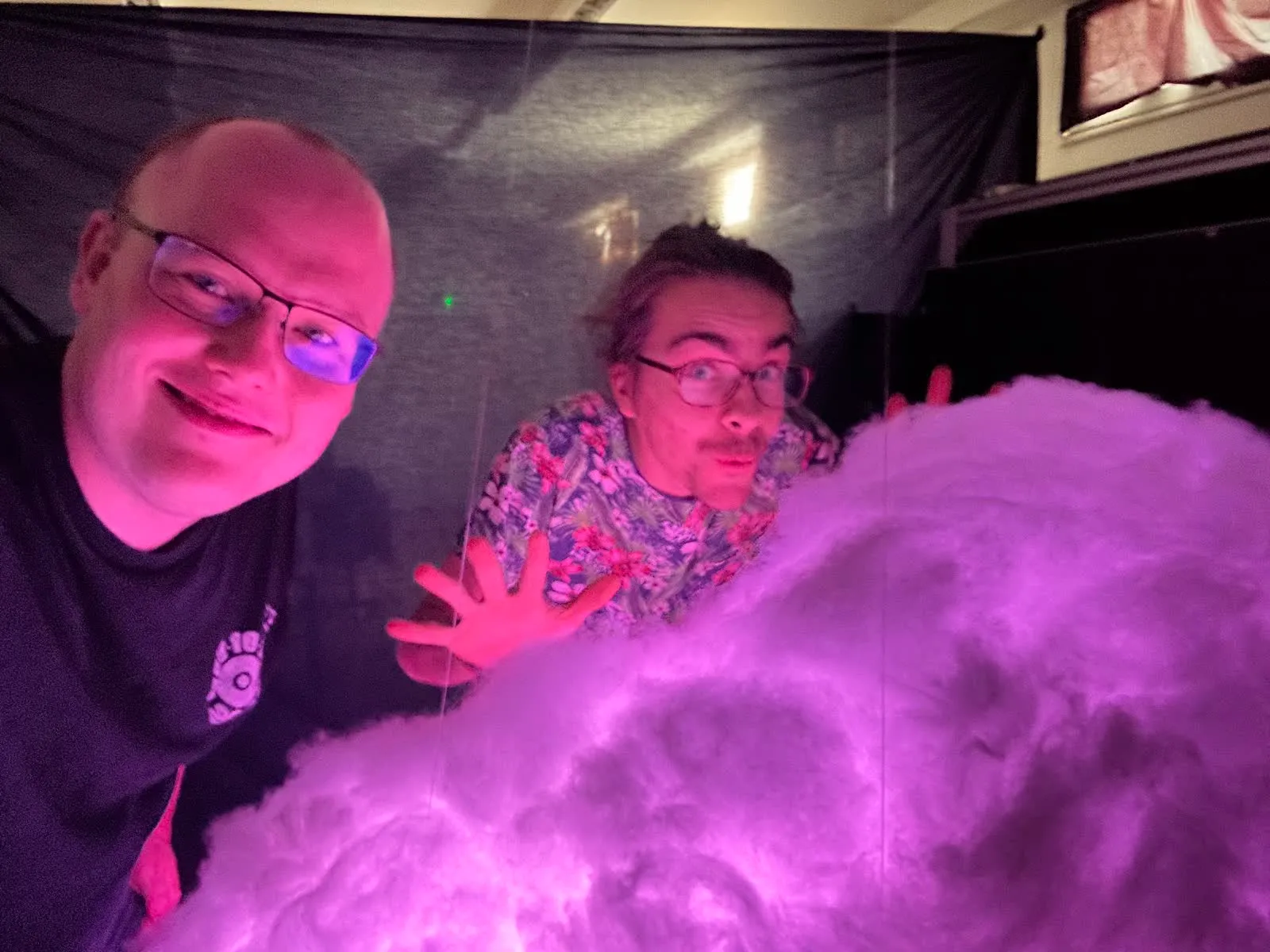
“Our need to belong is like our need for water.”
Kelly-Ann Allen, The Psychology of Belonging (2020)
Belonging is the felt sense of being accepted, included, understood, welcomed, liked and appreciated.
Psychology describes it as “a pervasive drive to form and maintain at least a minimum quantity of lasting, positive, and significant interpersonal relationships” (Baumeister & Leary, 1995). But reading the research as artists, what struck us was how much belonging depends on things a space can hold: small rituals, shared attention, the texture of a room, the warmth of light, the chance to be heard.
That makes it a subject for art as much as for science.
Five facets
Belonging is a universal, evolutionarily rooted drive to form and keep meaningful connections. In Maslow’s hierarchy, it comes right after food, water and safety. It is felt as being accepted, valued and understood.
Baumeister & Leary, 1995; Allen, 2020
Belonging is never fixed. It flickers, depends on context, and is renegotiated all the time. It is shaped by autonomy, choice and commitment, so it can’t be imposed.
Allen, 2020
Sharing a thought or a memory, listening, affirming, moving in time with someone. And reframing shared struggles as normal, so that difficulty doesn’t read as proof that you don’t fit in.
Walton & Cohen, 2011
What matters is frequent, warm, stable contact within real mutual care. Going from no close relationships to two changes everything; going from twenty to twenty-two changes very little.
Baumeister & Leary, 1995
Belonging lives in the body and attaches to places, objects, sounds, smells and textures. Think of a place where you belong and every sense comes back at once.
Allen, 2020
Beyond people
Thich Nhat Hanh often pointed to a cup of tea and saw a cloud in it. The cloud has not died: it became rain, then a river, then this tea. Nothing is only itself. It inter-is with everything that made it possible.
Where belonging is warm, social and fragile, interbeing is quiet and continuous. It never really goes away. Our project lives between the two. It invites people to feel connected to each other, and also to something larger that was here before them and will continue after: weather, water, sky.
Belonging in ourselves, with others, and with our environment are always connected. In this work, we lean towards the environment, and let the others follow.
Where mindfulness meets belonging
Our project began in contemplative practice. The literature suggests that some of its most powerful effects are social.
Compared with meditating alone, studies of group practice report a deeper experience that is easier to sustain. It is also linked with more care for others, empathy and co-regulation of mood.
A sharing round after a practice normalises experience. People discover that what they felt was not theirs alone, and they are listened to without judgement.
Fagioli et al., 2023; Wyatt et al., 2014
Contemplative dyads — one speaks, one listens, then swap — increased perceived social connectedness over months of training.
Kok & Singer, 2017
Why art, why research-creation
You can read about belonging, but you can’t download it. It happens between bodies in a shared place and a shared time. That is exactly what installations, rituals and performances are good at: they gather people, suspend ordinary rules for a while, and give attention something to rest on together.
Research-creation lets us do both at once. We make something, invite people into it, and listen carefully to what they experience: through questionnaires, physiology and, above all, their own words. The artwork becomes a way of asking a question, and the question keeps reshaping the artwork.
We think belonging deserves far more attention from artists and researchers, especially now, when so many people feel alone in crowded places.
An example of belonging
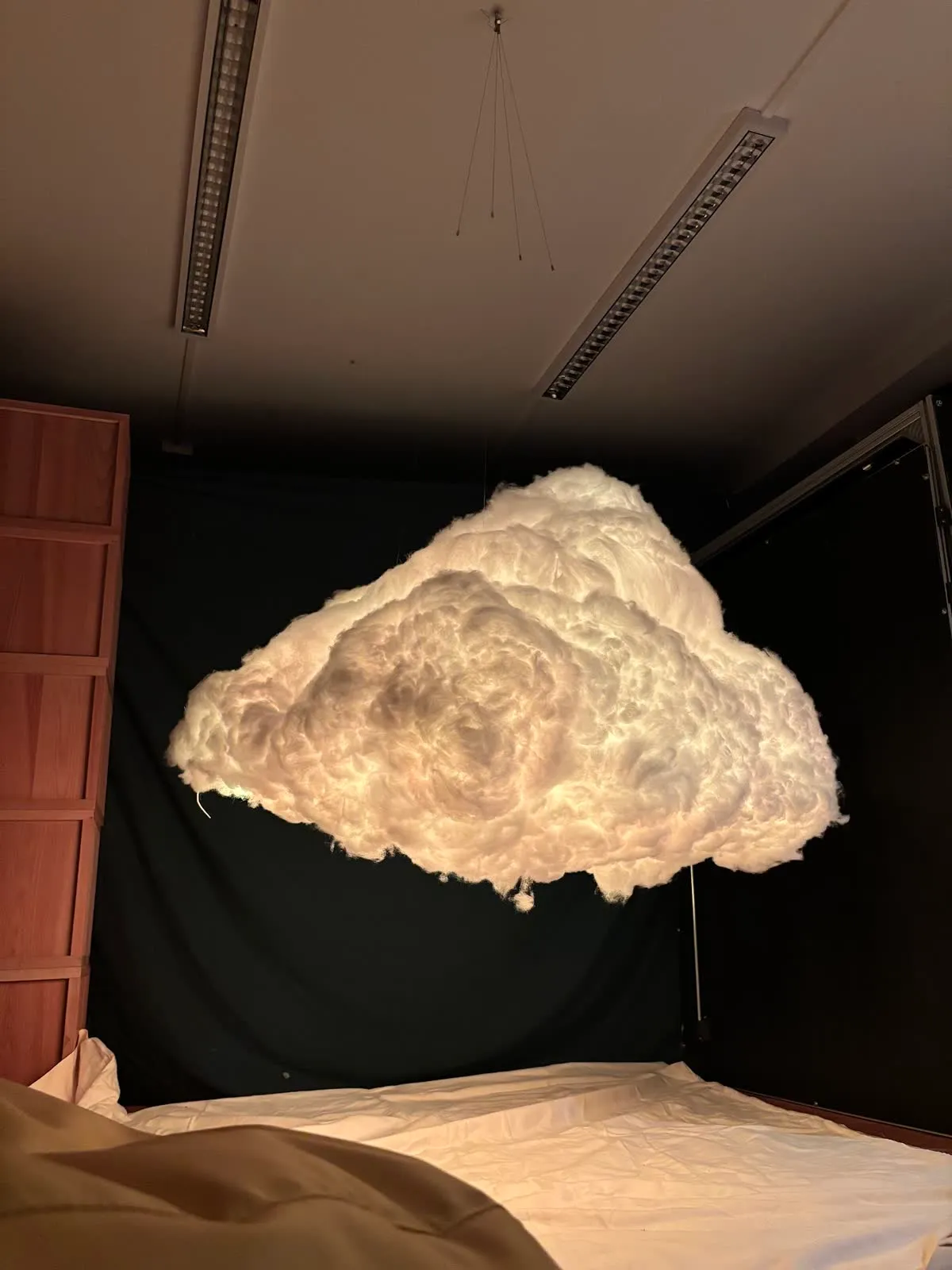
Belonging to ourselves, to each other and to nature are always connected. Cloudfulness leans towards nature: a shared sky, weather and water, something larger that was here before us and will continue after.
We started from what the research says belonging is, and turned each quality into a design choice. See the installation →
Why a cloud
Nobody has a better seat. A cloud offers a shared perspective without a stage.
A cloud is a volume for light to live in — glowing, flashing, catching the sun.
Clouds are impermanence made visible. They form, drift, rain and form again.
The water cycle is continuity and unity: the same water in vapour, rain, river, tea, and us.
Everyone sees clouds. We hope the next one you see brings a little of this back.
Dim, diffuse light feels primal and hides the imperfections of whatever room we are in.
The score
The installation unfolds in three stages. The magical twilight turns the experience into a story and builds intensity, so that by the time the cloud begins to breathe with you, you already feel bound to it.
Before
Shoes off, lying down beneath a cloud in warm golden light, before anything begins.
I
Sunset as a threshold · Lightning begins
II
A narrative turn · Colour blooms · Bonding with the cloud
III
Driven by your respiration · Breathing with, not controlling
How we reasoned
Every element of the installation answers a question about belonging. These are the decisions we made, and our reasons for them.
Sources
A selection from our literature review. These readings shaped our thinking about belonging, group practice, ritual and interactive experience.
An open invitation
We explored belonging to nature. Belonging to ourselves, to each other, to places and to communities are waiting to be explored too. We don’t have answers to these questions. If any of them pull at you, take them into your own practice, and tell us what you find.